
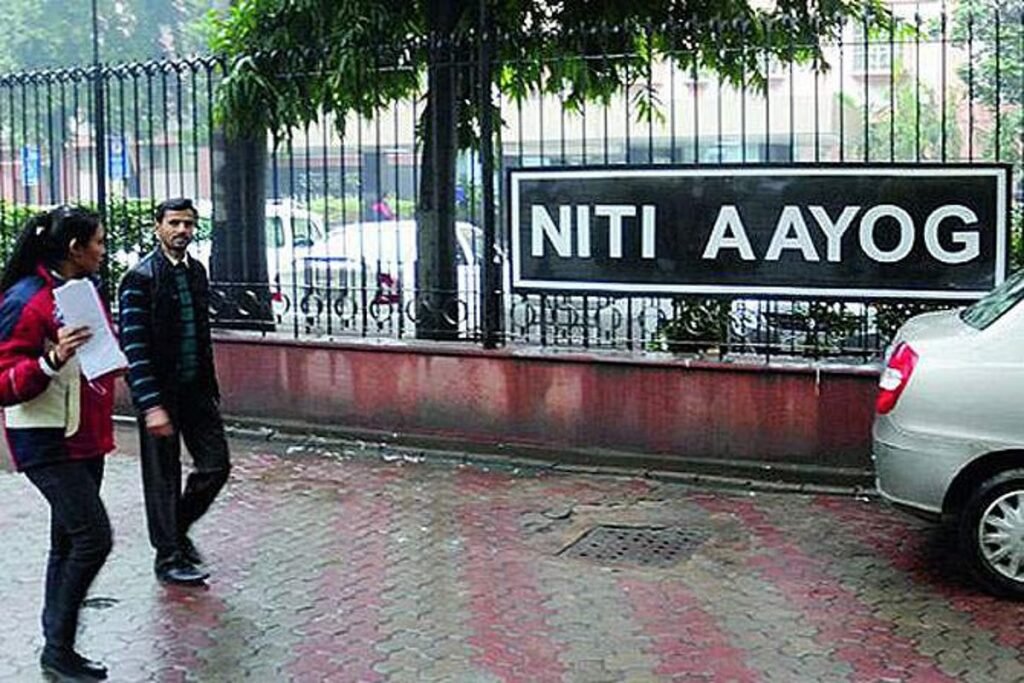
The NITI Aayog has officially released a groundbreaking strategic roadmap called “DPI@2047 for Viksit Bharat,” which shows the next step in India’s Digital Public Infrastructure (DPI) journey. The initiative marks a big change in India’s digital evolution, moving the focus from basic digital inclusion to enabling capability, productivity, and opportunity on a large scale. NITI Aayog has officially unveiled a landmark strategic roadmap titled ‘DPI@2047 for Viksit Bharat,’ charting the next phase of India’s Digital Public Infrastructure (DPI) journey. The initiative marks a significant transition in India’s digital evolution, shifting the focus from basic digital inclusion to enabling capability, productivity, and opportunity at scale.
The EkStep Foundation and Deloitte worked together to create the roadmap, which shows a two-phase plan to speed up India’s digital transformation. DPI 2.0 (2025–2035) is the first phase and is meant to lead to large-scale growth that improves people’s lives. DPI 3.0 (2035–2047) is the second phase and is meant to bring prosperity to everyone in the country.
DPI 2.0 is the main focus right now. It aims to fix structural problems in important areas like health, education, agriculture, and small and medium-sized businesses (MSMEs). The plan also stresses the need to make systemic enablers like access to credit, decentralized energy, and benefit delivery stronger. The roadmap lists four execution imperatives to make sure these goals lead to real results: district-led demand aggregation, scaling technology entrepreneurship, strategically using AI, and deploying cross-sector unlocks through better data use and digital transactions.
Experts say that this phase marks a change in philosophy. DPI 1.0 was mostly about identity, payments, and welfare. DPI 2.0, on the other hand, wants to build infrastructure that connects people so that new ideas can spread more quickly and reach more people. The roadmap creates an environment where AI and other technologies can grow and work well for people and small businesses by combining open digital infrastructure with trusted data flows.
Prof. Ajay Kumar Sood, who is the principal scientific adviser to the government, said that the next step needs to combine cutting-edge technologies with strict scientific standards. He said that being a leader in technology means being able to turn new ideas into public outcomes that can be trusted and scaled. Suman Bery, the outgoing vice chairman of NITI Aayog, also said that the focus has shifted from GDP to productivity. He said that raising productivity on a large scale is necessary for better jobs and better living standards.
NITI Aayog is still focused on the idea that when states grow faster, the country grows faster as India moves toward its goal of a “Viksit Bharat” (Developed India) by 2047. This roadmap shows how India will grow over the next 20 years by speeding up inclusive growth through strong digital architecture.