
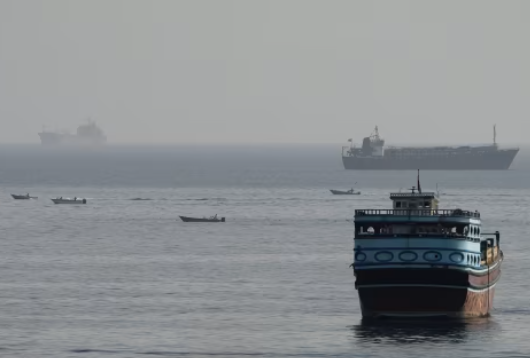
Following the conclusion of the 2026 Iran War, Tehran is aggressively capitalizing on shifting regional dynamics to undermine the long-standing American military architecture in the Persian Gulf. The conflict, which saw the unprecedented deployment of three U.S. carrier strike groups and direct kinetic exchanges, has left regional Arab states increasingly wary of Washington’s reliability. While the Islamabad Memorandum signed in June 2026 formally halted hostilities, the strategic environment has undergone a fundamental transformation: Gulf Cooperation Council (GCC) nations, once tethered to American security guarantees, are now actively pursuing “strategic autonomy” to hedge against future U.S.-led escalations that they believe jeopardize their own national interests.
Iran is exploiting this widening trust gap by promoting a new, indigenous regional security framework that excludes Western powers. By highlighting the vulnerability of U.S. bases—which became primary targets during the February and March 2026 missile exchanges—Tehran argues that American presence acts as a lightning rod for conflict rather than a deterrent. This narrative has gained traction in capitals like Riyadh and Abu Dhabi, where leaders are diversifying defense partnerships toward Europe and Asia to reduce reliance on the Strait of Hormuz and the U.S. naval umbrella.
Although the United States maintains a significant footprint across at least nineteen regional sites, the political calculus has shifted toward de-escalation and burden-sharing. As regional actors prioritize economic stabilization and infrastructure projects over collective defense against Iran, the U.S. faces the prospect of a “slow-motion” eviction. Washington’s challenge is no longer merely military deterrence, but the preservation of diplomatic relevance in a Middle East increasingly determined to navigate its own security without Western intervention.