
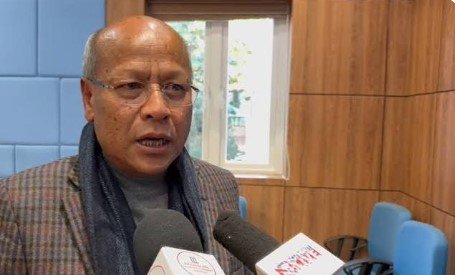
Political, legal, and administrative developments converged across Meghalaya as the National People’s Party-led state government formally appealed to the Joint Parliamentary Committee to soften proposed amendments to the Foreign Contribution Regulation Act (FCRA) so that Christian organizations and faith-based institutions are not adversely impacted by overly stringent regulatory clauses. While the administration argued that certain provisions in the proposed legislative changes could disrupt legitimate religious, charitable, and community-oriented work carried out by Christian bodies across the state, the stance drew sharp criticism from former NPP leader Wanweiroy Kharlukhi, highlighting underlying political friction surrounding the sensitive regulatory issue. Even as the debate over foreign funding norms unfolded, governance tensions intensified on another front as the controversy surrounding the Shillong Peak Ropeway project moved closer to a formal legal confrontation. The Khasi Hills Autonomous District Council (KHADC) is preparing to drag the state government to the High Court over unresolved disputes concerning trading licence requirements tied to the infrastructure project, signaling an escalating jurisdictional standoff between the autonomous council and the state administration over local regulatory authority and commercial compliance. Compounding the day’s administrative scrutiny, allegations of extortion involving police personnel along the National Highway at Diengpasoh came under formal magisterial examination on Monday. An East Khasi Hills Magistrate is set to review evidence submitted by the Khasi Students’ Union (KSU) accusing police officials of illegally collecting money from truckers transiting the highway corridor, placing law enforcement accountability squarely in the spotlight. Taken together, the three unfolding episodes underscore a complex moment of institutional testing in Meghalaya, balancing central legislative scrutiny over religious institutions, constitutional and regulatory friction between state authorities and autonomous tribal bodies over major tourism infrastructure, and grassroots demands for transparency and accountability in highway policing. As the Joint Parliamentary Committee weighs feedback on the FCRA framework, the KHADC readies its judicial challenge over the Shillong Peak Ropeway, and magisterial proceedings examine the KSU’s evidence against alleged highway graft, each development carries significant political and administrative ramifications for governance and public trust across the state.