
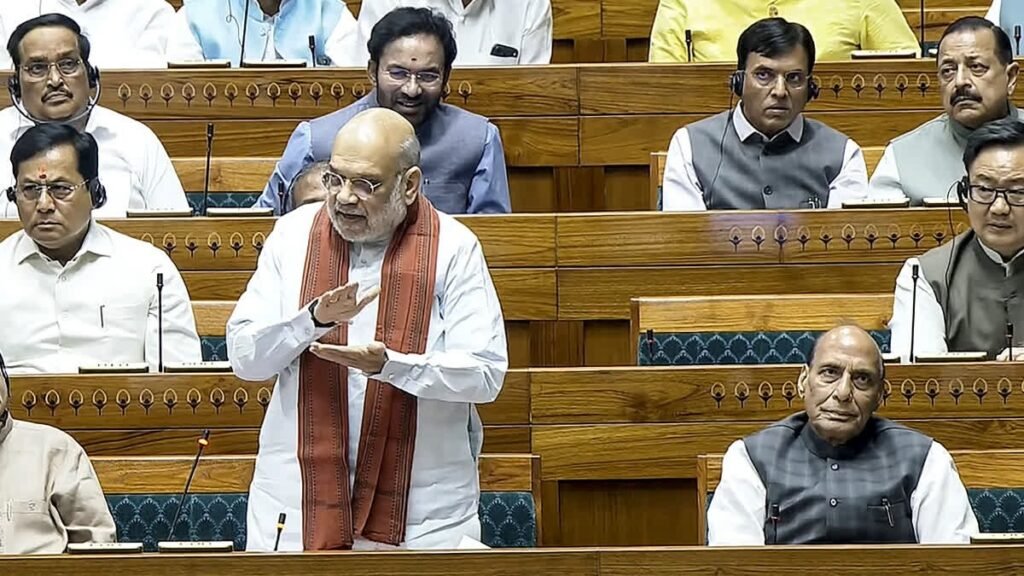
The union government has officially listed three pivotal bills for introduction in the Lok Sabha this Thursday, marking a definitive step toward implementing the long-awaited women’s reservation law by the 2029 general elections. The legislative package aims to not only “operationalize” the 33 percent quota for women but also significantly expand the maximum strength of the Lower House to 850 members.
The legislative agenda includes ‘The Constitution (One Hundred and Thirty-First Amendment) Bill, 2026,’ ‘The Delimitation Bill, 2026,’ and ‘The Union Territories Laws (Amendment Bill), 2026. Union Law Minister Arjun Ram Meghwal and Union Home Minister Amit Shah are slated to lead the introductions. The Business Advisory Committee has allocated a substantial 18 hours for the debate, indicating the magnitude of these reforms, with discussions expected to culminate in a vote by Friday.
A central feature of the draft Constitution amendment bill is the proposed increase of Lok Sabha seats from the current 543 to a maximum of 850. This expansion is designed to facilitate the 33 percent reservation for women without reducing the existing representation of other segments. The draft specifies that the House will consist of not more than 815 members from states and 35 from Union Territories. Furthermore, the reserved seats for women will be allotted by rotation across different constituencies to ensure broad representation over time.
The upcoming delimitation exercise will be based on the 2011 Census as the reference point. According to NDA sources, the final seat count will be determined by the Delimitation Commission, with the figure of 850 serving as a statutory upper limit. Notably, the new formula for seat allocation is expected to follow the principle of proportional representation, a move that observers suggest could favor southern states in the realignment of parliamentary power.
This legislative push occurs during a special three-day sitting of Parliament convened from April 16 to 18. By amending Article 81 and adjusting state assembly structures, the government seeks to ensure that the ‘Nari Shakti Vandan Adhiniyam’ is fully functional ahead of the next national polls. As the Rajya Sabha prepares to take up these bills following their passage in the Lower House, the moves signal one of the most significant structural changes to Indian democracy since independence.