
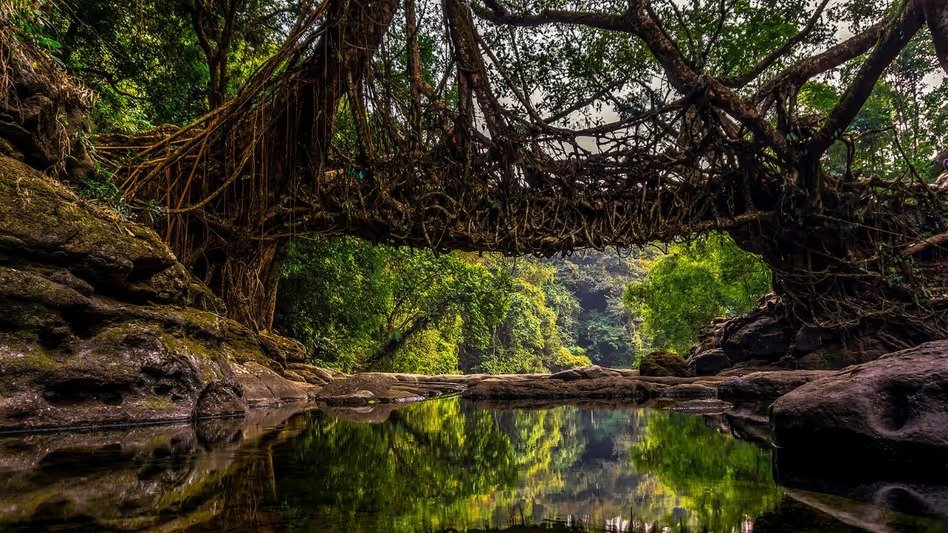
The famed Living Root Bridge emerged as the main attraction at a two-day cultural event celebrating the heritage, traditions, and artistic legacy of Meghalaya, which began on Sunday. Titled “Ever living Meghalaya: Echoes of the Past, Voices of Today”, the event featured stories, music, art, food, workshops, and immersive installations inspired by the hill state’s rich cultural identity. A specially created installation of the iconic Living Root Bridge, built using raw materials as a model of the original structure, drew large crowds at Bikaner House. The exhibition highlighted Meghalaya’s deep ecological traditions and the enduring relationship between land, people, and culture. Through visual storytelling, archival material, traditional crafts, and live artistic expressions, visitors were introduced to evolving indigenous traditions rooted in continuity and sustainability.
The programme brought together the cultures of the Khasi, Jaintia, and Garo communities through discussions, performances, live painting sessions, readings, workshops, and regional cuisine. The venue itself was designed to reflect Meghalaya’s landscapes, oral traditions, and living heritage. Several noted personalities from across the state also participated in the event.
Organisers described “Everliving Meghalaya” as a multi-sensory cultural experience aimed at bringing the literary, social, and lived realities of Meghalaya into a shared public space, where stories become immersive experiences.
The exhibition explored the connection between language, landscape, and living traditions by weaving together narratives from the past and present through participation and interaction.
Among the prominent contributors were Riniki Chakravarty Marwein, a young poet and storyteller; Phaibhakupar Kharlukhi, a Shillong-based oil landscape artist known for his nature-inspired works; and Palcal M. Pathaw, whose work blends Khasi-Jaintia cultural narratives with contemporary design practices.
Beyond the exhibition space, the programme also featured interactive conversations, musical performances, workshops, and food experiences celebrating Meghalaya’s cultural memory and traditions. Curated displays from Meghalayan Age – The Store added elements of material culture to the exhibition’s storytelling approach.
The design of the exhibition incorporated traditional materials such as black clay pottery, bamboo, cane, wood, textiles, and printed art forms to recreate the textures and lived realities of Meghalaya. Several reputed institutions also took part in the event, including Sieng Riti Institute, O Shillong, and Skubo Project.