
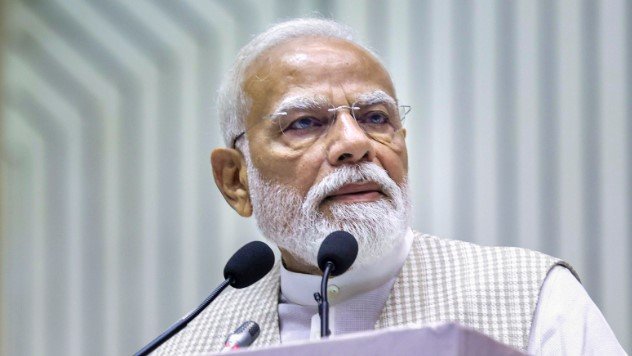
On the occasion of National Technology Day, Prime Minister Narendra Modi paid a stirring tribute to the scientists and leaders of the 1998 Pokhran-II nuclear tests and said that “no power in the world” can make self-reliant India compromise on its sovereignty. Speaking at a meeting of defence personnel and scientists, the Prime Minister recalled the immense international pressure and economic sanctions that India had to face following the tests and how the country’s refusal to bow down had redefined its stature in the world. He emphasised that the intrepid spirit that was displayed in the deserts of Rajasthan nearly three decades ago paved the way for the “Viksit Bharat” of today, a nation that bargained from a position of strength and strategic autonomy.
The Prime Minister underscored that India’s nuclear journey has always been guided by the philosophy of ‘Peace through Strength’ and has maintained a credible minimum deterrent while strictly adhering to the ‘No First Use’ policy. He connected the spirit of Pokhran to modern-day initiatives like Aatmanirbhar Bharat and said the country’s advances in space, defense and semiconductor technology today were a continuation of the same defiant legacy. By saluting the dream of former PM Atal Bihari Vajpayee and the brilliance of Dr APJ Abdul Kalam, Modi reminded the world that India’s rise is irreversible and its security non-negotiable. He concluded that the lessons of 1998 are still applicable today in a volatile geopolitical environment: that true independence is achieved through domestic innovation and the unwavering determination to put national interest above any external dictations. The speech was a historic comment and a modern warning that India remains a resilient power, impervious to global coercion.