
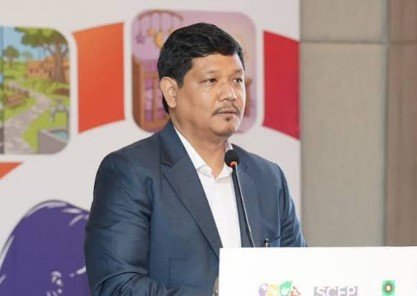
Meghalaya Chief Minister Conrad K. Sangma recently interacted with the inaugural cohort of the Chief Minister’s Leadership in Education and Development (CMLEAD) Fellowship during a formal induction ceremony at his official residence in Shillong, where he, alongside Education Minister Lahkmen Rymbui, distributed laptops to the newly selected fellows. Designed as a pioneering state-led initiative to inject skilled young professionals directly into Meghalaya’s administrative education apparatus, the fellowship aims to accelerate comprehensive reforms and elevate student learning outcomes across all 12 districts through strategic collaboration with Samagra Shiksha, the Directorate of Educational Research and Training, and various district education offices. Addressing the assembly of fellows, Chief Minister Sangma emphasized that true governance transcends traditional bureaucratic frameworks, stressing that physical infrastructure alone—such as constructing new school buildings—does not equate to educational improvement unless it directly enhances classroom learning quality and student comprehension. He noted that public officials and politicians frequently become bogged down by routine administrative duties, inadvertently detaching themselves from ground realities, and highlighted that the fellows are uniquely positioned to bridge this critical gap by gathering honest, firsthand field assessments. Likening the fellowship to a prestigious government internship in public service rather than a corporate placement, Sangma urged the Education Department to establish rigorous performance indicators, clear reporting mechanisms, and strict accountability measures, including a mandate for every fellow to inspect at least one school weekly while rigorously evaluating infrastructure, sanitation, furniture availability, and student learning standards with a specific emphasis on separate girl’s restroom facilities. Beyond monitoring physical conditions, the Chief Minister encouraged the young professionals to spearhead community-led engagement by actively involving village headmen, church pastors, local volunteers, and civil society organizations in school improvement projects, teaching support, and collaborative problem-solving. Urging the inductees to view remote postings and difficult working environments not as insurmountable obstacles but as valuable catalysts for impactful public change, Sangma invited them to submit innovative policy recommendations aimed at reshaping the state’s educational landscape for future generations.