
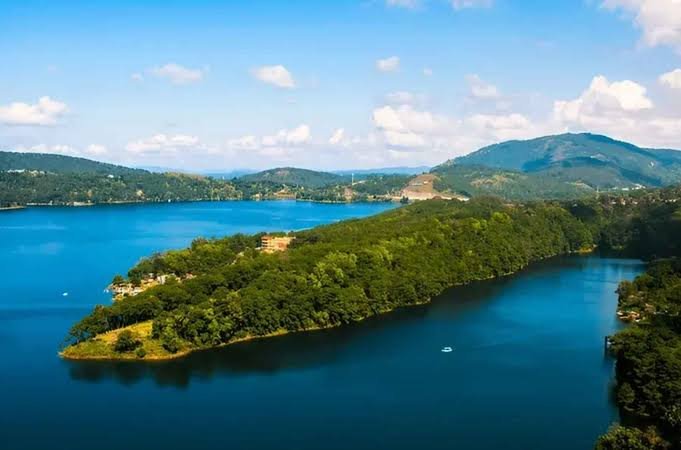
Pressures continue to escalate in Meghalaya as demurrers against the controversial tourism design near Umiam Lake consolidate, with the agitation led by the Green- Tech Foundation (GTF) entering its eleventh day. The kick at Malki Ground has taken a serious turn, with GTF clerk general Ritre Lyngdoh continuing an indefinite hunger strike after the organisation’s president H. Bansiewdor Nonglang was hospitalised due to deteriorating health following several days of fasting. Despite medical enterprises and signs of weakening vitals, Lyngdoh has pledged to continue the kick, stating that public support has strengthened his resoluteness.
The agitation centres on the state government’s decision to lease Lumpongdeng Island for 60 times to develop a luxury resort and gym, a move explosively opposed by environmental groups and several civil society organisations. Protesters have advised of grave consequences, indeed warning that lives may be lost if the government does n’t drop the parcel and restore the land to what they describe as public power. The design, awarded to Umiam hospices Pvt. Ltd., is part of a larger plan involving around 66 acres, including both landmass and islet areas, and is to be developed by Indian hospices Company Limited under its Taj brand.
Amid mounting opposition, the state government has maintained that the design will go ahead but clarified that no construction will take place on Lumpongdeng Island itself. Authorities have stated that the ecologically sensitive islet will remain untouched, with development confined to the being landmass point of Orchid Lake Resort. Chief Minister Conrad K. Sangma has assured that a white paper will be released to enhance translucency and address public enterprises. officers have also emphasized that strict environmental safeguards will be executed, with necessary concurrences similar as concurrence to Establish and Consent to Operate needed before any work begins, and violations could lead to check.
The government has defended the design by pressing its implicit profitable benefits, including job creation, growth in tourism, and openings for original communities. With sightseer figures rising significantly in recent times, authorities argue that high- end structure is demanded to sustain growth, boost hospitality services, and promote sectors similar as water sports, original yield requests, and event tourism. still, critics argue that the government is pushing the design in an “adamant” manner despite wide opposition. Several stakeholders have raised enterprises about the ecological impact, advising that large- scale commercialization could damage the pristine terrain that attracts callers to the region. Former civil menial Toki Blah questioned whether replacing natural geographies with luxury structure aligns with public interest, while environmentalist H. H. Mohrmen criticized the model of tourism that prioritizes commercial realities over community- led enterprise.
Social activist Agnes Kharshiing also opposed the design, professing abuse of power in leasing ecologically sensitive land without acceptable public discussion and warning of implicit pitfalls to the region’s terrain and coffers. enterprises have also been raised over land power protections under indigenous vittles and the long- term impact on original communities. At the same time, some voices within civil society have expressed support for the action, pointing to the character of the Taj group and the eventuality for employment and profitable growth. The debate has further boosted with political responses, including reflections by Ardent Miller Basaiawmoit, which sparked review from those in the hospitality sector. As demurrers continue and positions remain deeply divided, the situation reflects a broader conflict between development intentions and environmental preservation in Meghalaya, with no immediate resolution in sight.