
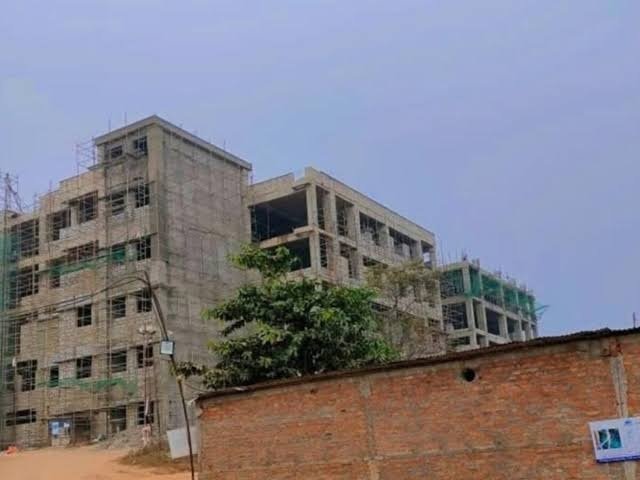
The operationalisation of the much-anticipated Tura Medical College, currently standing at 84 per cent physical completion, has faced significant delays primarily due to a severe and persistent shortage of qualified teaching faculty, according to recent updates from the Health & Family Welfare Department. While infrastructure development progresses across multiple fronts—with the 80-bedded and 150-bedded hospital blocks within the Tura Civil Hospital campus currently reaching 55 per cent and 25 per cent completion respectively, hostels and Type-5 staff quarters at Doldagre slated for completion by December 31, 2026, the academic block targeting March 31, 2027, and remaining residential quarters projected for June 30, 2027—the institutional launch remains hamstrung by a critical lack of academic staff. Despite undertaking three extensive rounds of advertisements and dedicating five months of concerted outreach efforts targeting doctors serving across the Garo Hills region, the state has struggled to fill the 97 mandatory faculty posts prescribed by the National Medical Commission (NMC) for an initial intake of 50 MBBS seats, resulting in alarming staff deficits that stand at 86 per cent for Professors, 85 per cent for Associate Professors, 52 per cent for Senior Residents, and 36 per cent for Assistant Professors. Officials emphasized that many of the mapped in-service doctors are currently deployed across essential public health outposts, primary health centers, health and wellness facilities, and regional hospitals situated outside West Garo Hills, meaning their immediate redeployment would severely disrupt vital healthcare delivery services elsewhere in the state. During a comprehensive review meeting chaired by Health Commissioner & Secretary Dr. Joram Beda and newly appointed Director of Health Services (Medical Education & Research) Dr. Baladalin Lyngdoh, authorities highlighted the heavy toll of these administrative bottlenecks, noting that for every single year the medical college remains non-functional, an entire batch of aspiring MBBS students loses a valuable academic opportunity, especially considering that although the central government originally sanctioned 150 seats, the state has thus far been unable to satisfy baseline faculty norms even for a reduced capacity of 50 seats. Amid these ongoing recruitment hurdles, Dr. Beda reassured stakeholders that state quota seats will eventually be offered at an affordable annual fee matching Shillong Medical College at Rs 33,000 per annum, while confirming that Tura Civil Hospital and the Academic & Administrative Block at Doldagre will remain under complete government control.