
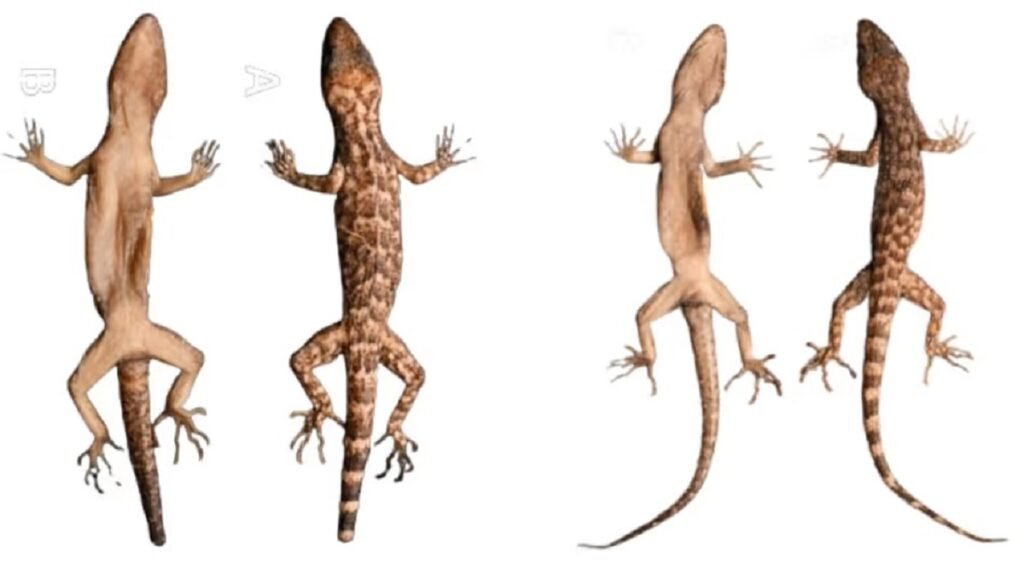
Shillong’s iconic wooden bus, ‘Bossmit’, has found an unusual namesake in the wild. A newly discovered species of cave-dwelling bent-toed gecko in Meghalaya has been named Cyrtodactylus bossmit, after the city’s much-recognised mode of public transport.
The gecko is one of two new species identified in the limestone cave systems of Meghalaya’s Khasi and Jaintia Hills. The discoveries take the number of recognised species of the genus Cyrtodactylus in the state to nine, according to a study published in the international journal Taprobanica on November 25.
The second species, Cyrtodactylus kremicola, derives its name from the Khasi word ‘krem’, meaning cave.
The researchers confirmed the two species through morphological examinations and molecular genetic analysis, which helped distinguish them from other closely related geckos.
The Bossmit bent-toed gecko was recorded at Maw Tynghiang Cave in Nongnah village of South-West Khasi Hills district and at Wahlong Byrong in East Khasi Hills district. Researchers also established its connection with previously examined populations from Sohra and Umdohlun, indicating that the species is distributed across the Khasi Hills.
The Krem bent-toed gecko was identified at Rupasor Cave in Syndai village of West Jaintia Hills district. It is currently known only from this location and is associated with limestone outcrops, caves, rock crevices and surrounding forest vegetation.
Both species are moderately sized. The study recorded a maximum body length of 81.7 mm for C. bossmit and 83.6 mm for C. kremicola.
The research also revisited the classification of Cyrtodactylus khasiensis, a species first described by British naturalist Thomas C Jerdon in 1870 from the Khasi Hills.