
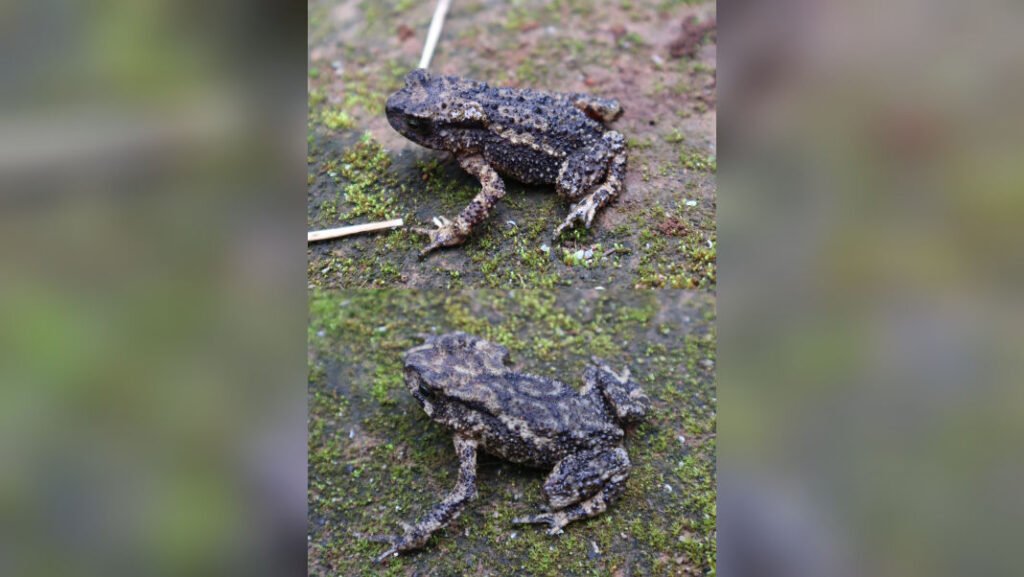
A remarkable new species of toad has been discovered in the sacred groves of Mawphlang in Meghalaya’s East Khasi Hills, adding another significant chapter to the rich biodiversity of Northeast India. Scientists have named the newly identified species Duttaphrynus dhara in honour of the traditional Khasi female attire “Dhara”, paying tribute to the region’s cultural heritage, deep-rooted traditions and the close relationship between the Khasi people and their forests. The discovery was made during routine field surveys in the high-altitude landscapes of Mawphlang, located at around 1,854 metres above sea level. Researchers found the tiny toads hiding among leaf litter and low vegetation in fallow agricultural fields bordering dense montane forests. Unlike the common Asian toad often seen near human settlements, the newly discovered species appears to prefer quiet forest-edge habitats in the hills. Researchers described Duttaphrynus dhara as a small-sized toad, with adult males measuring between 40 and 41.8 millimetres in length. The species has a compact body, a broad head without prominent cranial ridges and rough skin covered with pointed warts.
Its appearance includes a brown body marked with irregular black patches, a thin pale stripe running along its back, dark-coloured fingers and toes, and a creamy white belly with black blotches. Scientists confirmed the discovery through both traditional morphological studies and advanced genetic analysis using mitochondrial 16S rRNA sequencing. The findings showed that the species forms a distinct genetic lineage within the Duttaphrynus genus. According to the study, the new species shows a genetic difference of 4.4 to 6.7 percent from its closest relatives — Duttaphrynus stuarti and Duttaphrynus chandai. Morphometric comparisons also clearly distinguished it from related species.
At present, the species is known only from its type locality in Mawphlang, making it both unique and potentially vulnerable. Researchers said its restricted distribution highlights the urgent need to conserve Meghalaya’s fragile ecosystems, which form part of the Indo-Burma biodiversity hotspot known for exceptional amphibian diversity.
The discovery also underlines the ecological importance of the sacred groves of Meghalaya, which continue to preserve rare and undocumented species. The study was led by researchers Holiness Warjri, Madhurima Das, A.A. Thasun Amarasinghe and Jayaditya Purkayastha, and has been published in the scientific journal Taprobanica.