
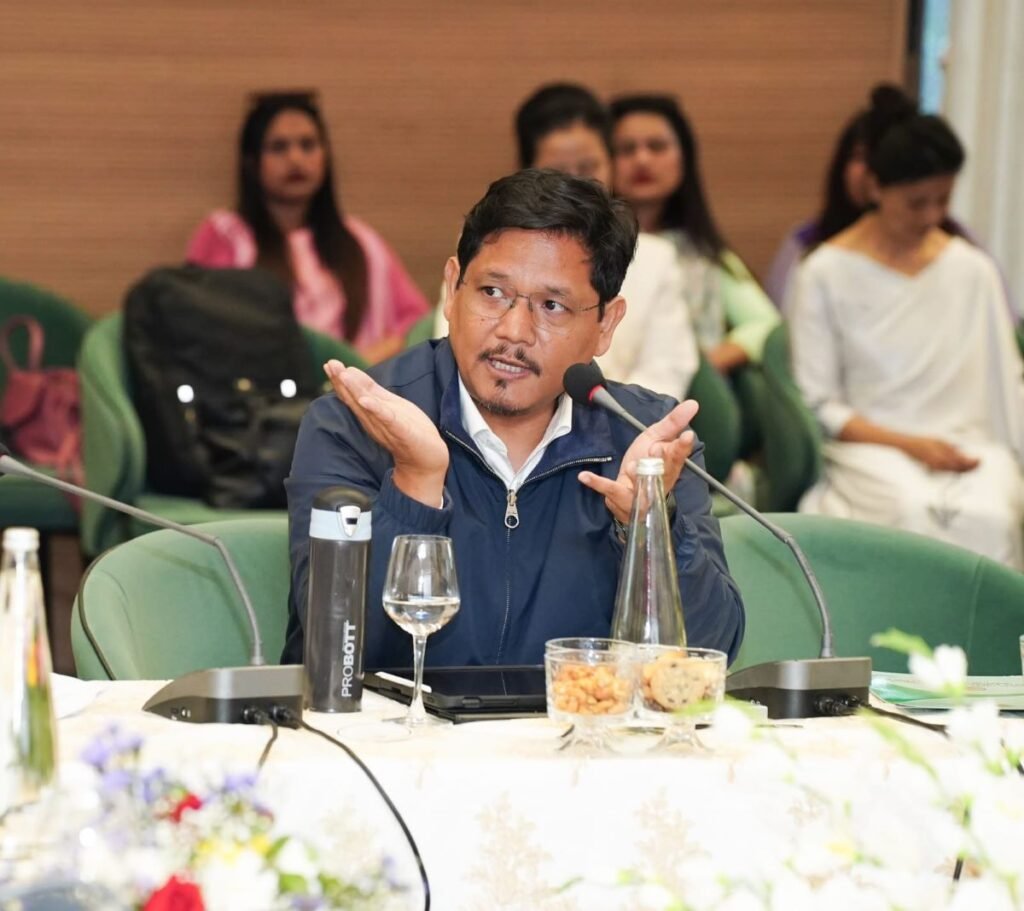
Assam Chief Minister Conrad K. Sangma on Tuesday chaired a series of review meetings with various departments at the State Guest House in Shillong. Urban infrastructure and redevelopment in Shillong formed a key focus of the meetings. The chief minister emphasized that all projects must maximize public value, economic activity, and long-term sustainability. He called for the adoption of innovative models, including public-private partnerships, and directed that concession options be carefully evaluated before committing public funds. Stressing efficient land use, he noted that prime urban spaces should be developed into vibrant commercial and public hubs. Land allocation and infrastructure planning were also reviewed, including the earmarking of land for power-related infrastructure, with emphasis on coordinated planning to optimize the use of resources. Discussions on the redevelopment of key urban areas highlighted the need to enhance economic activity while addressing the requirements of local communities.
Highlighting connectivity as critical to the success of infrastructure projects, the chief minister called for improved last-mile transport solutions, including consideration of initial support measures to encourage public usage. Plans for the development of public spaces—such as parks, amphitheatres, and community zones—were also reviewed, along with the ongoing relocation of the police reserve to unlock new public-use areas. He reiterated that urban development must be holistic, integrating infrastructure, mobility, commerce, and public spaces in a cohesive manner.
The functioning of the Meghalaya Transport Corporation was reviewed in the context of strengthening urban mobility and improving last-mile connectivity. A detailed review of the Forest and Environment Department focused on improving coordination, ensuring efficient use of resources, and accelerating time-bound implementation. The chief minister emphasized the need for measurable outcomes over the next three to six months. Key areas discussed included strengthening wildlife conservation, mitigating human-animal conflict, improving forest management practices, and enhancing revenue through better monitoring systems. The need to leverage technology, strengthen field infrastructure, and enforce stricter action against illegal activities such as mining and smuggling was also highlighted.
He further encouraged the promotion of eco-tourism through professional management and public-private partnerships, along with research and documentation of biodiversity. The meeting also examined a comprehensive proposal with the Department of Arts and Culture, along with research groups representing the Khasi, Jaintia, and Garo communities, to undertake a structured and multidisciplinary study of their history, culture, and origins. A proposal to develop the agarwood (oud) and essential oils sector was also reviewed. The chief minister emphasized the need for a professional and market-driven implementation model with strong private sector participation. Plans include the establishment of a Centre of Excellence for cultivation, processing, and export, aimed at improving farmer incomes, generating employment, and positioning Meghalaya as a key player in the high-value agarwood market. Preparations for the National Games 2027 were assessed, with a focus on infrastructure readiness, accommodation, transport, and overall logistics.
The chief minister stressed the need for timely completion of sports infrastructure and high-quality arrangements for athletes. It was informed that over 1,200 athletes are currently under training, with improved performance noted in recent competitions. The government reiterated its commitment to successfully hosting the Games and creating a lasting legacy for the state.