
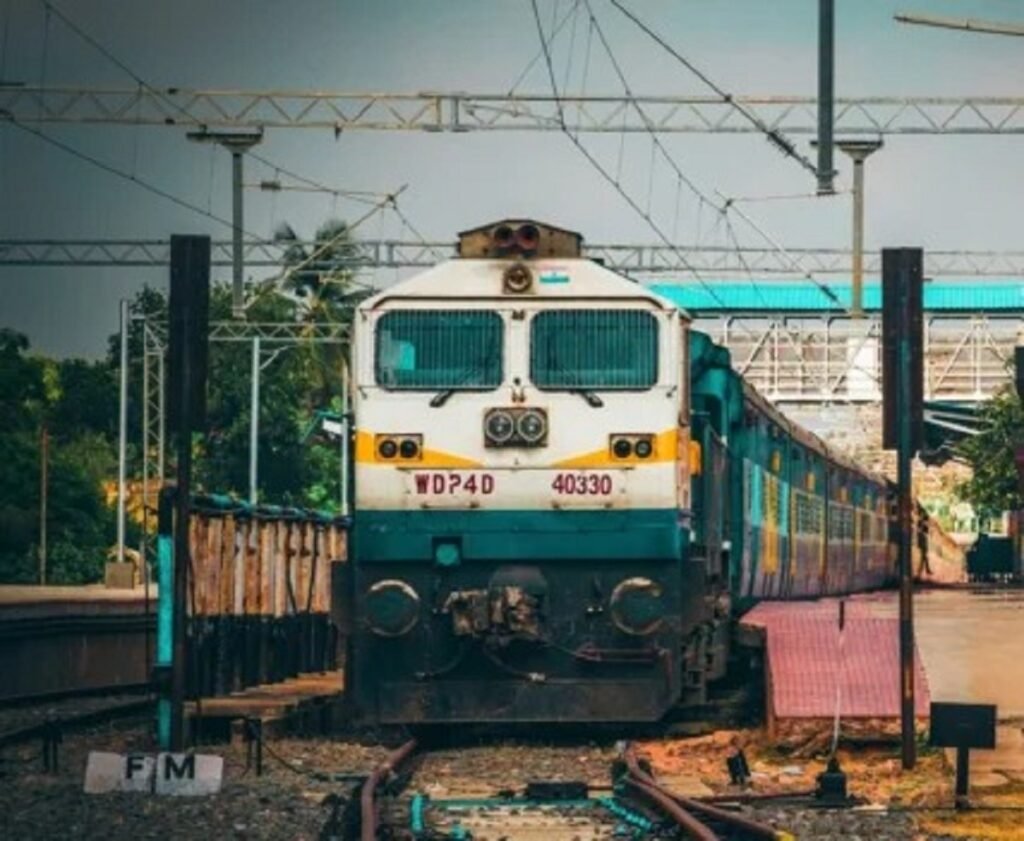
The debate over railway connectivity in Meghalaya has intensified, with the Bharatiya Janata Party (BJP) and the Voice of the People Party (VPP) offering differing but intersecting perspectives on development, migration control and policy coherence. On Wednesday, the Meghalaya BJP reiterated its support for railway expansion in the state, arguing that rail transport is not only essential for long-term economic growth but also a more effective mechanism for regulating migration compared to roadways. Party spokesperson Mariahom Kharkrang warned that continued resistance to rail infrastructure could prove costly for the state in the long run.
“If railways do not come to our state, we will be the ones who lose out. Thirty or forty years from now, future generations may question why we failed to bring railway connectivity,” Kharkrang said, adding that improved rail access could significantly boost trade, investment and overall development. He pointed out that Meghalaya’s heavy dependence on road transport has contributed to higher prices of essential goods compared to neighbouring Assam. “Road transport is the most expensive mode of transport anywhere in the world. This directly impacts market prices and burdens consumers,” he said.
Addressing migration concerns, Kharkrang argued that railways offer better regulatory control through fixed entry points such as stations, where monitoring mechanisms can be enforced. In contrast, he said, roadways allow unrestricted entry at all hours, making regulation difficult. He also called for an objective assessment of the Inner Line Permit (ILP) system in other northeastern states to identify gaps and evaluate its effectiveness. The BJP spokesperson acknowledged Meghalaya’s unique challenges as a transit state and said this could partly explain the Centre’s hesitation in extending ILP to the state. Emphasising balance, he said development and regulation must proceed together, with safeguards to protect indigenous interests.
Meanwhile, the VPP said Meghalaya is facing a complex policy dilemma, marked by regional divisions and the absence of a clear, state-wide framework on railway expansion. Party spokesperson Batskhem Myrboh highlighted a sharp contrast between attitudes in the Garo Hills and the Khasi-Jaintia Hills. While recognising the importance of infrastructure for economic growth, Myrboh questioned opposition to railways in parts of the state when an operational rail line already exists in Mendipathar in the Garo Hills. “If people want to enter the Khasi Hills via rail, they can simply come through the Garo Hills,” he said, arguing that selective resistance weakens the policy position on migration and security.
Myrboh said recent protests by tourist taxi associations against Assam-registered vehicles reflect deeper logistical challenges and the lack of state-regulated transport alternatives. He stressed that Meghalaya’s small population faces genuine anxieties over internal and cross-border migration, which continue to shape public resistance to large infrastructure projects.
Raising concerns over policy coherence, the VPP questioned how the state government plans to link demands for ILP with railway expansion when nearly half the state already has rail connectivity without such protective measures. The party maintained that without a unified approach and legally backed safeguards, railway expansion risks placing both policymakers and indigenous communities in a difficult position.