
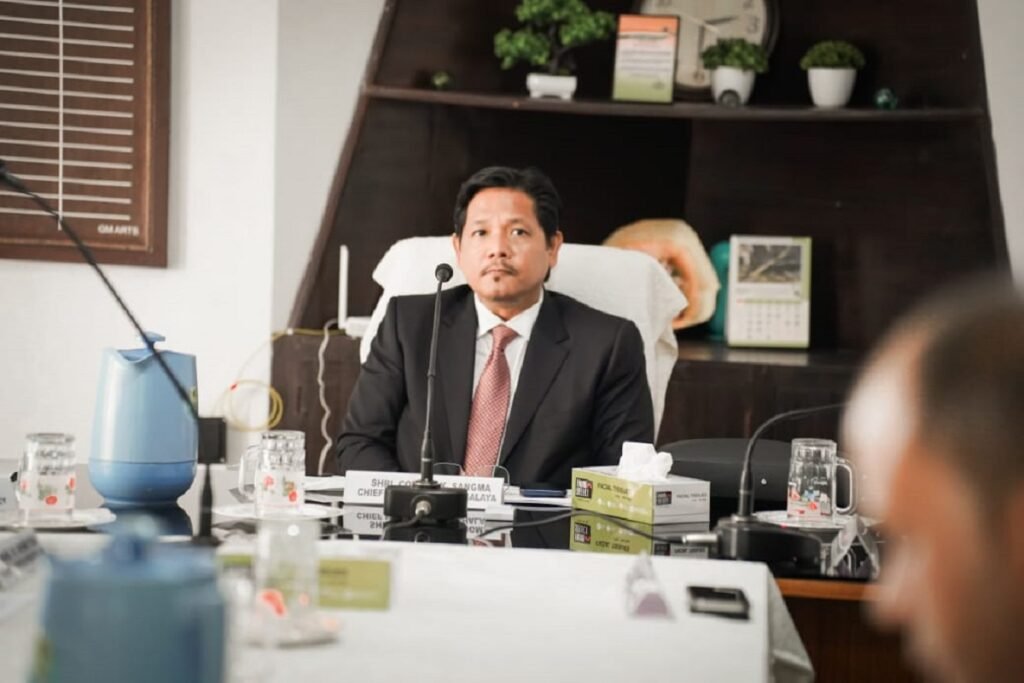
Meghalaya Chief Minister Conrad K. Sangma highlighted a significant transformation in public expectations during the foundation-laying ceremony for the Rymbai Government Higher Secondary School in East Jaintia Hills. He noted the shift from basic demands for amenities such as roads and water supply to aspirations for higher educational facilities, advanced infrastructure, and improved quality of life. This evolution reflects rising living standards and progress in Meghalaya, as Sangma emphasized the government’s commitment to maintaining this momentum.
Recalling his first visit to Rymbai in 2020, where he observed poor road conditions, interrupted water supply, and limited infrastructure, he expressed satisfaction with the substantial improvements evident today. Sangma acknowledged that while the journey to comprehensive transformation is ongoing, the progress marks a positive direction for the state.
During the ceremony, the school community presented various proposals regarding infrastructure enhancements, the upgrade of the higher secondary section, and the introduction of new academic streams. The Chief Minister assured that these proposals would be seriously considered, mentioning that discussions are already underway regarding the need for additional classrooms and incorporating Science and Commerce streams into the curriculum.
Additionally, Sangma presided over a review meeting concerning schemes implemented by the PHE Electrical Sub-Division in Rymbai. The meeting covered the Functional Household Tap Connections (FHTC) and the Rymbai Greater Water Supply Scheme, identifying challenges faced by the subdivision and reviewing progress and timelines for various departmental schemes. He emphasized the necessity of establishing a PHE Division in East Jaintia Hills District to ensure effective implementation and monitoring of schemes.
Sangma directed officials to provide FHTCs to all anganwadi centers and schools and stressed the importance of community involvement in public awareness campaigns for the success of PHE initiatives. He underscored the critical need to protect water sources during developmental projects to prevent disruption of water supply for existing public health engineering schemes.