
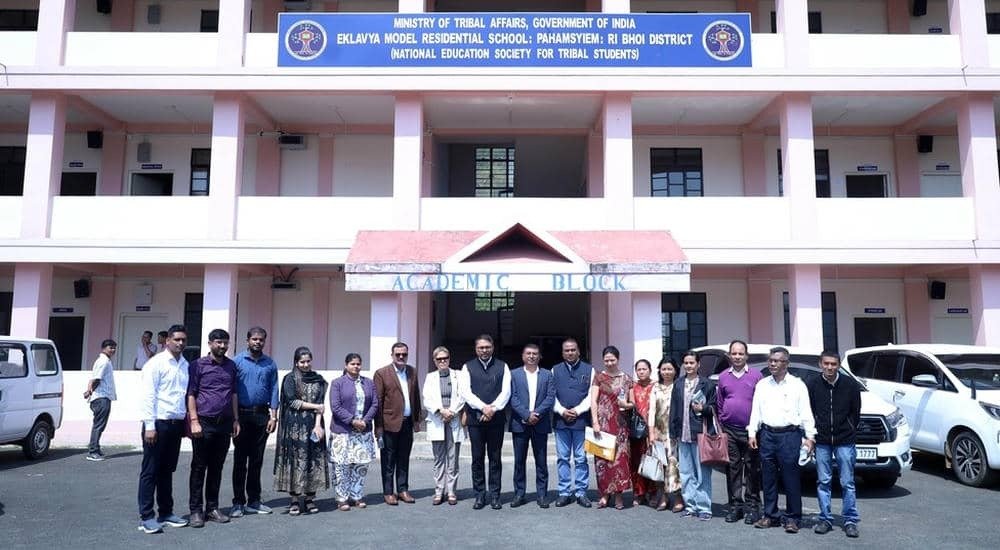
A high-level legislative committee has raised serious concerns regarding infrastructure deficiencies at the Eklavya Model Residential School (EMRS) in Pahamsyiem, Nongpoh. The findings follow a critical inspection on Wednesday, March 25, 2026, which aimed to assess the school’s readiness to operate at full capacity.
The Committee on Scheduled Castes and Scheduled Tribes of the Meghalaya Legislative Assembly conducted the campus visit to review existing facilities and operational preparedness. The delegation was led by Committee Chairman and Nongstoin MLA Gabriel Wahlang, accompanied by members Ampareen Lyngdoh and Nongpoh MLA Mayralborn Syiem.
During the visit, school officials briefed the panel on several early-stage challenges. A primary area of concern identified by the committee was the girls’ hostel, where several essential amenities are reportedly missing or incomplete. These shortcomings have sparked questions regarding the institution’s ability to provide a standardized living and learning environment for its students.
“Addressing these deficiencies at this early stage is crucial,” the committee emphasized. Members stated that a comprehensive report of their findings would be compiled and submitted to the state government to seek immediate intervention and funding.
The inspection carries significant weight, as the Pahamsyiem campus is the first fully operational EMRS in Meghalaya, having commenced classes in December 2025. With a second school having recently opened in Samanda, East Garo Hills, the committee indicated that the experience at Pahamsyiem will serve as a vital blueprint for the rollout of similar institutions across the state.
The Eklavya Model Residential Schools are a flagship Central Government initiative designed to provide high-quality education to Scheduled Tribe students in remote areas. In Meghalaya, 38 such schools have been sanctioned with a total estimated outlay of approximately ₹1,400 crore.
As the state embarks on this massive expansion of tribal residential schooling, the panel’s findings serve as a timely reminder that physical infrastructure must keep pace with educational ambitions to ensure the success of the initiative.