
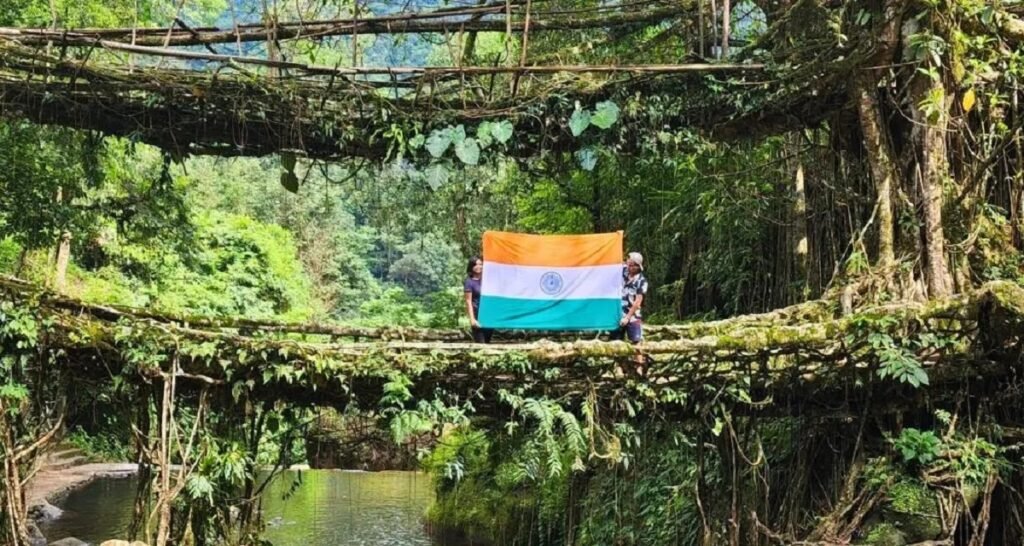
On March 23, in New Delhi, the Government of India announced the nomination of the Living Root Bridges of Meghalaya for inclusion in the UNESCO World Heritage List for the 2026–27 cycle. Union Culture Minister Gajendra Singh Shekhawat communicated this information in a written reply during a Lok Sabha session. Additionally, India has put forth a proposal to recognize the Ancient Buddhist Site at Sarnath, Uttar Pradesh, for the upcoming 2025–26 cycle. These nominations have been forwarded to the UNESCO World Heritage Centre for evaluation.
The Living Root Bridges, also referred to as Jingkieng Jri, exemplify an extraordinary cultural landscape crafted by local communities residing in one of the planet’s wettest regions. They stand as a testament to remarkable human ingenuity, collaboration, and resilience. This addition would expand India’s already notable list of UNESCO World Heritage Sites, which includes historical landmarks such as the ancient ruins of Nalanda University and the Mahabodhi Temple Complex in Bihar, as well as other significant sites like Rani ki Vav, Chhatrapati Shivaji Terminus, Jantar Mantar in Jaipur, and the Historic City of Ahmedabad. Furthermore, India is home to prestigious natural heritage sites, including Kaziranga National Park, Sundarbans National Park, and Great Himalayan National Park.