
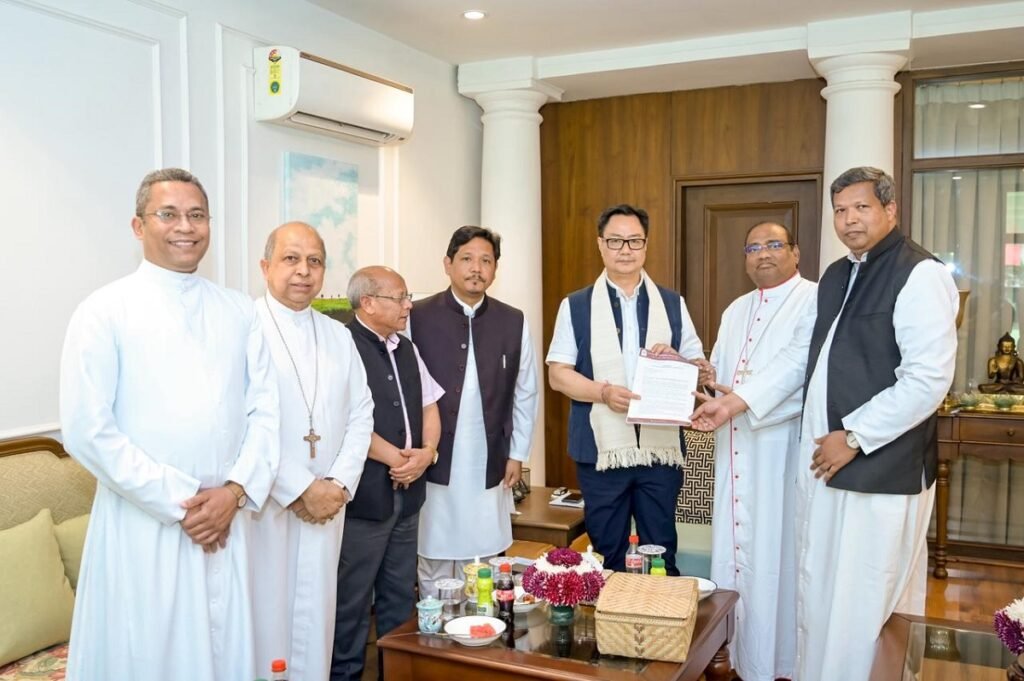
Meghalaya Chief Minister Conrad K. Sangma, along with Deputy Chief Minister Prestone Tynsong, on Wednesday called on Union Minister for Minority Affairs Kiren Rijiju in New Delhi to discuss concerns regarding the proposed FCRA Amendment Bill.
The meeting was also attended by representatives from the Catholic Bishops’ Conference of India (CBCI) and other stakeholders.
During the interaction, the delegation highlighted the vital role played by educational, healthcare, and social service institutions across Meghalaya and the Northeast, particularly in remote and tribal regions. Many of these institutions, supported through foreign contributions, continue to serve marginalized communities and contribute significantly to regional development.
The delegation expressed concerns over certain provisions in the proposed amendments, especially those related to seizure of properties, which have raised apprehensions among Christian organisations and other civil society groups. They emphasized the need for wider consultation and detailed deliberations to ensure that such concerns are adequately addressed.
“We have conveyed the concerns expressed by Christian organisations, particularly regarding provisions related to seizure of properties, and emphasized the need for a balanced and consultative approach,” said the Chief Minister.
Highlighting the broader impact of such institutions, he added, “Institutions supported through foreign contributions have been playing a transformative role in delivering education, healthcare, and social services in some of the most remote and underserved areas of Meghalaya and the Northeast.”
Union Minister Shri Kiren Rijiju gave a patient hearing to the issues raised and assured the delegation that the concerns would be carefully examined. He further assured that consultations with stakeholders will be undertaken and necessary discussions held before finalizing any amendments.
“I am encouraged by Hon’ble Minister Shri Kiren Rijiju ji’s assurance that wider consultations will be held and that stakeholders’ concerns will be duly examined before any final decision is taken,” the Chief Minister stated.
“Our objective is to work constructively with the Government of India to ensure that the law safeguards both national interests and the invaluable contributions of charitable and faith-based institutions,” he added.
The delegation also stressed the importance of incorporating appropriate safeguards in the legislation to ensure continuity of essential services while upholding transparency and accountability. It underscored the need to protect the rights and functioning of faith-based and charitable organisations working for the welfare of communities.
Expressing optimism following the meeting, the Chief Minister said, “We remain hopeful that through dialogue and engagement, a solution will emerge that protects the rights of organisations while strengthening regulatory mechanisms.”