
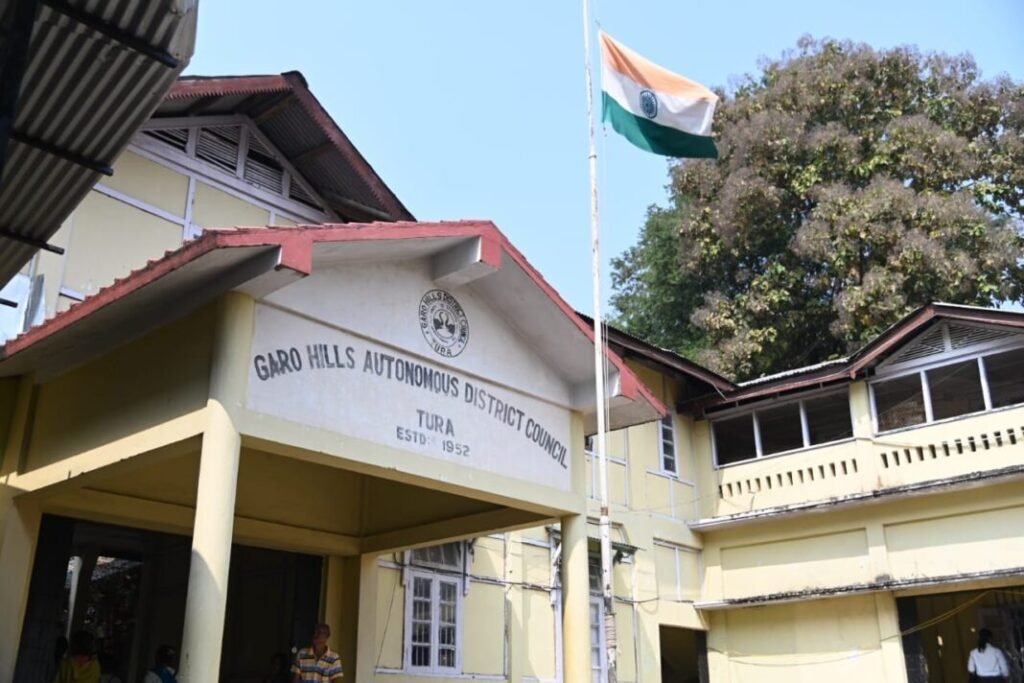
In a significant and contentious move, the Garo Hills Autonomous District Council (GHADC) has amended its election rules to make possession of a Scheduled Tribe (ST) certificate mandatory for candidates contesting council polls. The decision marks a major shift in electoral eligibility and has reignited debates over representation and tribal rights in the region.
The development comes in the aftermath of unrest in parts of Garo Hills, particularly in West Garo Hills, where tensions escalated after former MLA Esmatur Mominin, a non-tribal leader, attempted to file his nomination earlier this month. The situation led to curfews, internet shutdowns, and violence that claimed lives and caused property damage.
Originally scheduled for April 10, the GHADC elections were postponed, with the council’s term extended by six months. Against this backdrop, the passage of the amendment triggered celebrations in Tura and other parts of the region, reflecting strong support among sections of the tribal population.
The amendment, however, is not yet law and requires the approval of the Meghalaya governor to come into force. A previous attempt to introduce similar changes had been struck down by the High Court due to procedural lapses.
Politically, the move signals a notable shift for the National People’s Party (NPP), which had earlier supported inclusive participation, including that of non-tribals. The party’s leadership now appears to have aligned with growing public sentiment in favor of protecting tribal representation in autonomous institutions.
Chief Minister Conrad K. Sangma described the amendment as a “historic and important decision,” asserting that such councils are fundamentally designed to safeguard tribal interests. He added that the demand had remained unfulfilled for decades despite its significance to local communities.
While the decision has been welcomed by many tribal groups, it has also raised concerns among non-tribal communities, particularly in the plains belt, who may view the amendment as exclusionary. The political implications of this shift are likely to unfold in the coming months, as parties balance competing interests.
At its core, the issue underscores a broader challenge in the Northeast—how to reconcile the protection of indigenous rights with inclusive democratic participation. As the region navigates this delicate balance, the GHADC amendment stands as a defining moment in its evolving political landscape.