
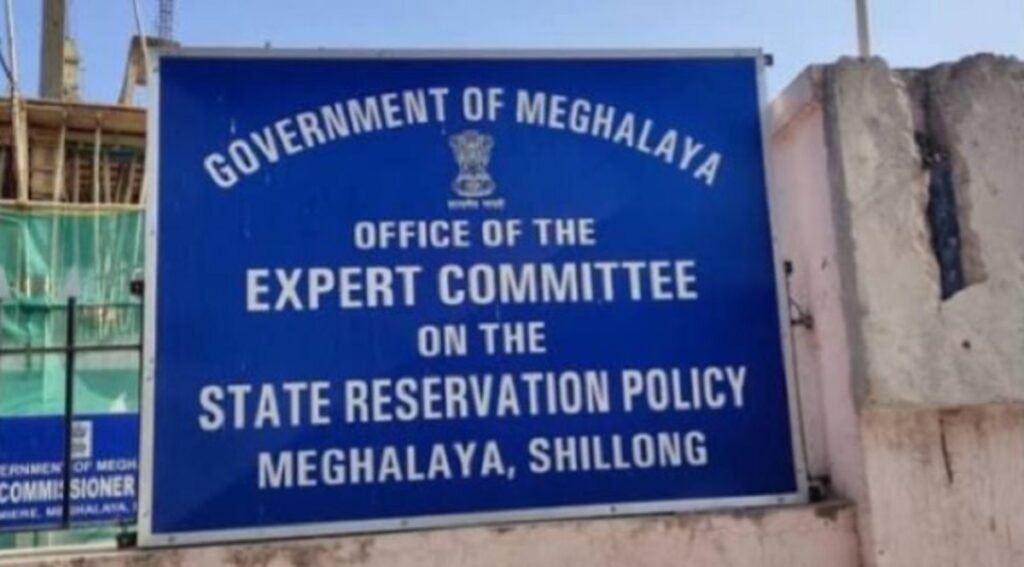
An expert committee on reservation policy for tribals in Meghalaya has called for the introduction of the creamy layer principle to ensure that its benefits reach the most disadvantaged sections within the reserved categories of people across the state. Chief Minister Conrad K Sangma formally tabled the report which also called for strict implementation of the reservation roster system, besides recommending that the state retain the existing 1972 policy. “The committee has recommended that the state government examine the introduction of the creamy layer principle, where constitutionally applicable, to ensure that the benefits of reservation reach the most disadvantaged sections within reserved categories,” a gist of the voluminous report stated.
According to a gist of the report, the panel advised the state government to consider introducing the creamy layer principle, wherever constitutionally applicable, to prevent relatively advanced sections within reserved categories from cornering benefits. The committee underscored that such a measure would help improve equity and target historically marginalised groups more effectively. At the same time, the panel recognised the 1972 Resolution as a valid and operative policy and recommended that it be retained in its present form. It recorded that a majority of stakeholders favoured continuation of the existing framework and that there were no compelling grounds for a fundamental alteration of the policy at this stage. The report marks the culmination of a comprehensive review process initiated through a notification issued by the Governor on September 12, 2023.
The committee had been tasked with examining the current reservation structure, consulting stakeholders across the state and suggesting modifications, if necessary. While the extension of reservation to educational institutions was outside its formal mandate, the committee said the state government may independently examine the matter in line with constitutional provisions if deemed necessary. Highlighting regional disparities, the panel recommended targeted interventions to improve educational standards, particularly in the Garo districts, to enhance long-term socio-economic development and competitiveness in public employment. The committee did not favour extending Economically Weaker Sections (EWS) benefits to SC, ST and OBC categories, observing that EWS is a separate constitutional classification distinct from existing reserved groups.