
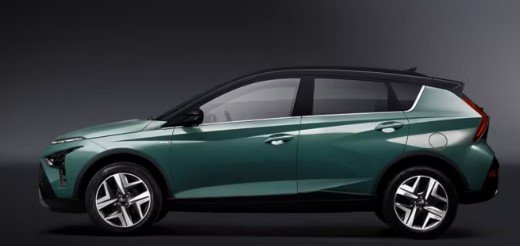
Recent sightings of camouflaged test mules have sparked significant excitement in the automotive world, leading to new digital renderings that preview the potential face of the 2026 Hyundai Bayon. Based on the latest spy shots captured during road tests, these illustrations suggest that Hyundai is moving toward a much sharper, more aggressive aesthetic for its entry-level crossover. The updates appear designed to align the Bayon with Hyundai’s latest “Sensuous Sportiness” design language, ensuring it remains competitive in the fast-evolving European B-segment.
The most striking changes highlighted in the renders focus on the front fascia. Following the trend set by the new Kona and Santa Fe, the 2026 Bayon is expected to feature a full-width LED light bar stretching across the hood line, acting as the Daytime Running Lights. The main headlamp clusters are positioned lower on the bumper, integrated into a more prominent, geometric grille. This “split-light” setup gives the vehicle a futuristic, wider stance that masks its compact dimensions, providing a more premium road presence than the current model.
While the side profile retains the Bayon’s signature “arrow-shaped” C-pillar, the renders suggest new alloy wheel designs and more pronounced character lines along the doors. At the rear, the update is expected to be more evolutionary. Spy shots indicate a revised bumper and updated internal graphics for the boomerang-shaped LED taillights, which may now be connected by a thin light strip to mirror the front-end treatment. These tweaks aim to give the car a more cohesive and sophisticated appearance from every angle.
Inside the cabin, the 2026 Bayon is rumored to receive a significant tech boost. Expected upgrades include a dual-screen setup comprising a digital instrument cluster and a larger infotainment touchscreen, likely running Hyundai’s latest software interface. Improved materials, new upholstery options, and enhanced driver-assistance systems (ADAS) are also anticipated to be part of the mid-cycle refresh, bringing the Bayon closer to its larger siblings in terms of refinement and safety.
Under the hood, Hyundai is expected to stick with its efficient powertrain lineup, likely focusing on mild-hybrid configurations. The 1.0-liter T-GDi three-cylinder engine, paired with 48V mild-hybrid technology, will likely remain the mainstay, offering a balance of performance and low emissions. While an official debut date has not been confirmed, the level of detail in recent spy shots suggests that Hyundai could unveil the refreshed Bayon in late 2025 or early 2026, targeting buyers who want a stylish, tech-forward crossover without the footprint of a full-sized SUV.